What Is Blockchain
Table of Contents
Abstract
Today, we start a new journey to learn about blockchain and the basic ideas behind it. We have two goals: to understand it clearly, and to use that knowledge in our jobs.
Let’s get started
Why?
Traditional database technologies present several challenges for recording financial transactions. For instance, consider the sale of a property. Once the money is exchanged, ownership of the property is transferred to the buyer. Individually, both the buyer and the seller can record the monetary transactions, but neither source can be trusted. The seller can easily claim they have not received the money even though they have, and the buyer can equally argue that they have paid the money even if they haven’t. - Why is blockchain important?
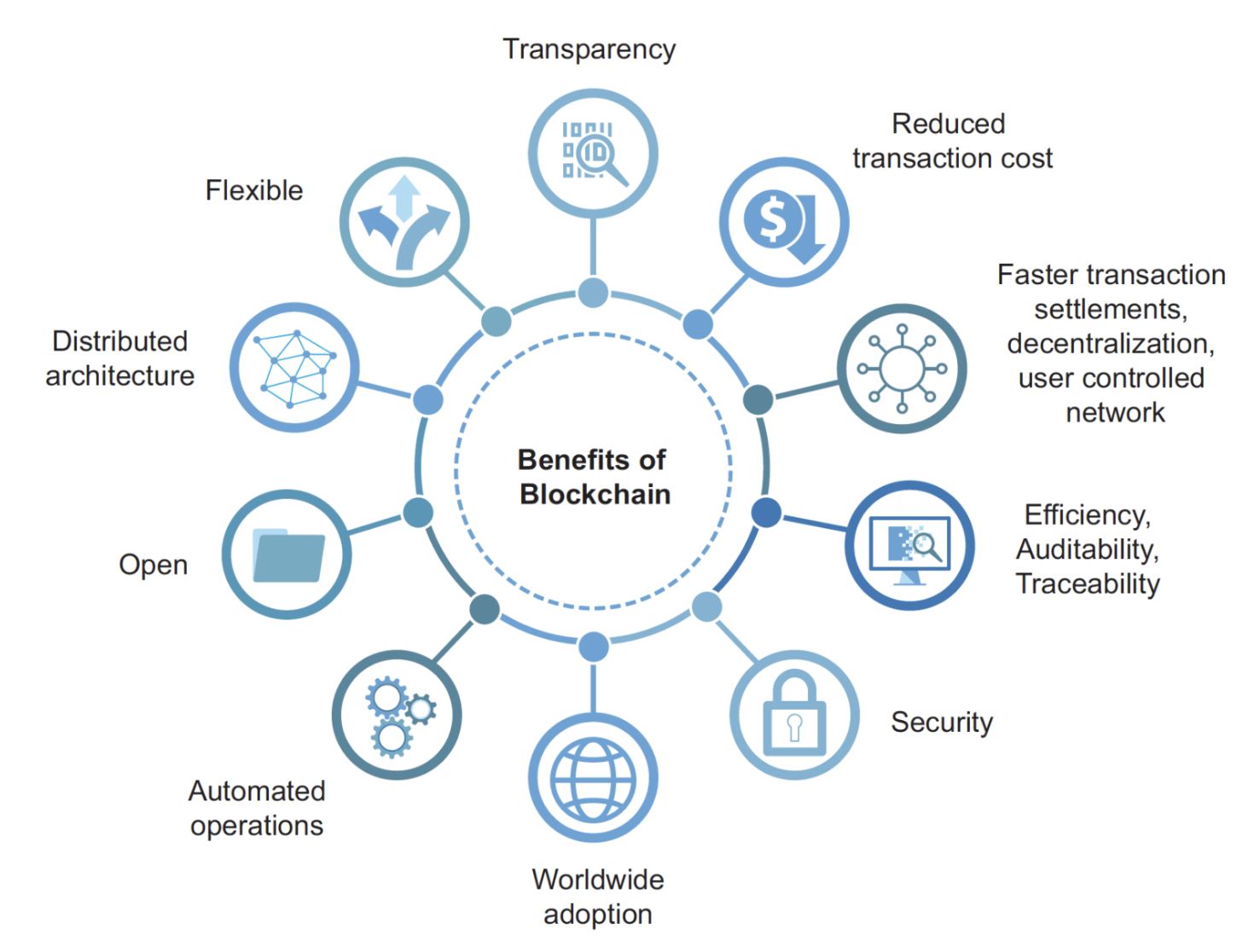
List of benefits of blockchain
Blockchain technology is important because it solves major problems with a lot of digital technology. It’s open, yet secure. Everyone involved can see what’s going on, but no one can make changes once the system adds a block to the chain.
What Is Blockchain?
When I search on the internet, I find many different definitions of it. But in general, we can think of blockchain as a decentralized digital database or ledger that securely stores records across a network of computers in a way that is transparent, immutable, and resistant to tampering.
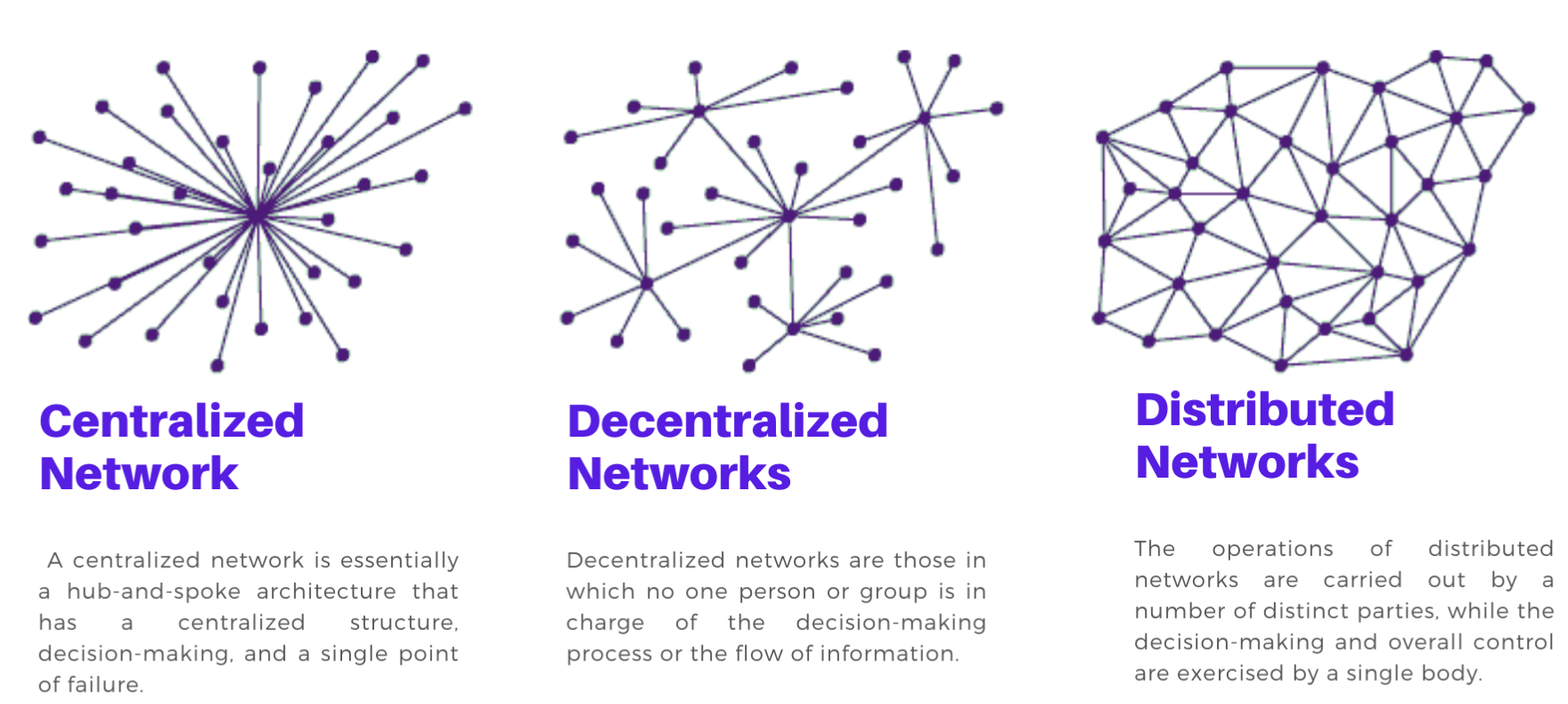
Centralized vs. Decentralized vs. Distributed Systems
We will have an article to explore this topic in a later section. However, it is important for us to understand the differences between Decentralized and Distributed systems.
- Distributed: Multiple interconnected nodes working together as a single system.
- Decentralized: Multiple nodes with independent control, no central authority.
All decentralized systems are distributed, but not all distributed systems are decentralized.
The History of Blockchain: From Cryptographic Roots to a Global Infrastructure
Blockchain’s story begins long before Bitcoin. The origins of blockchain date back to 1991 when Stuart Haber and W. Scott Stornetta introduced a cryptographically secured timestamp system to prevent digital document ( How to time-stamp a digital document). However, it was in 2008 that Satoshi Nakamoto revolutionized the concept by publishing the Bitcoin whitepaper. This document, titled Bitcoin: A Peer-to-Peer Electronic Cash System, outlined a blockchain-based digital currency.
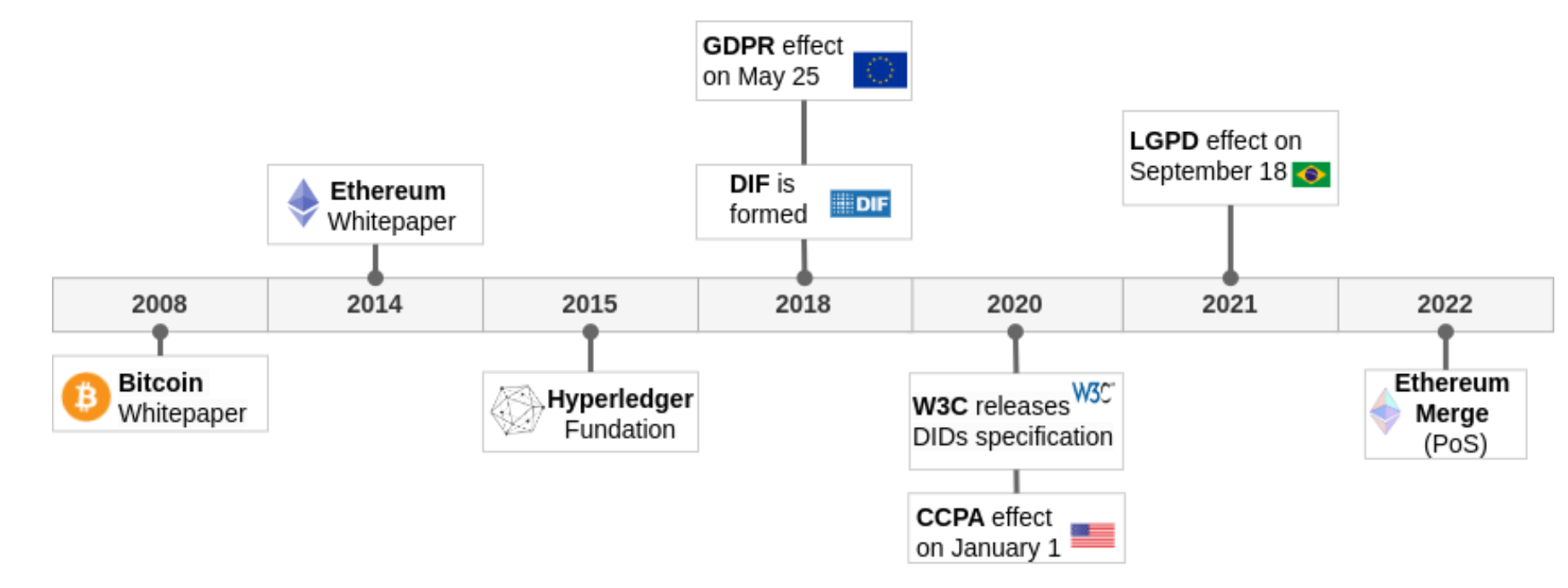
A timeline of some significant events in the context of blockchain, decentralized identity - A Survey of Blockchain-Based Privacy Applications: An Analysis of Consent Management and Self-Sovereign Identity Approaches

History of Blockchain - geeksforgeeks
- In 1991, researcher scientists named Stuart Haber and W. Scott Stornetta introduce Blockchain Technology. These scientists wanted some Computational practical Solution for time-stamping the digital documents so that they couldn’t be tempered or misdated. So both scientists together developed a system with the help of Cryptography. In this System, the time-stamped documents are stored in a Chain of Blocks.
- 2008 Satoshi Nakamoto conceptualized the concept of “Distributed Blockchain” in his white paper: ”A Peer to Peer Electronic Cash System”.
- 2014 Blockchain 2.0 is born.
- 2015 In 2015, Ethereum Frontier Network was launched, thus enabling developers to write smart contracts and dApps that could be deployed to a live network. In the same year, the Linux Foundation launched the Hyperledger project.
- 2022 Ethereum has shifted from Proof of Work(PoW) to Proof of Stake(PoS) consensus mechanism. The original Ethereum mainnet merged with Beacon Chain which has Proof-of-Stake. Now it is existing as one chain. Ethereum’s energy consumption has reduced by ~99.95%.
Types of BlockChain
There are four types of blockchain structures
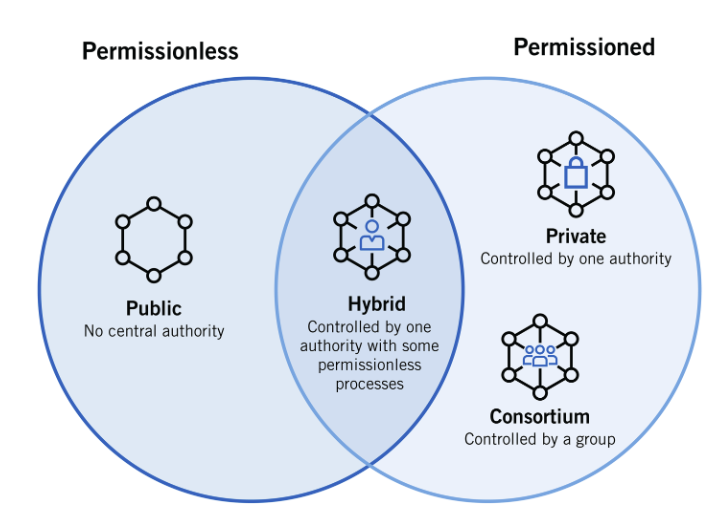
Types of Blockchains - jdsupra.com
Public BlockChain : A public blockchain is a non-restrictive, permission-less distributed ledger system.
Private BlockChain : A private blockchain is a restrictive or permission blockchain operative only in a closed network.
Consortium BlockChain : A consortium blockchain is a semi-decentralized type where more than one organization manages a blockchain network.
Hybrid BlockChain : A hybrid blockchain is a combination of the private and public blockchain. It uses the features of both types of blockchains that is one can have a private permission-based system as well as a public permission-less system.
Conclusion
Blockchain is more than a technology — it’s a new way of thinking about trust, transparency, and value in the digital age.
Learning it means understanding how the modern digital world organizes truth without authority. Below is a mind map showing the history of blockchain

MindMap
What’s Next?
After we understand the basic ideas, we will move on to the main parts of blockchain. We will learn about:
- Decentralized networks – systems that are not controlled by one single person or organization.
- Cryptography – the technology that keeps blockchain safe. Without it, blockchain could not work.
- The ledger – the place where blockchain stores all data, similar to a database.
- Consensus – the way all nodes in the network agree on the same information. This is the core of blockchain.
- Smart contracts – programs on the blockchain that run automatically and help create more advanced features and transactions.
Wishing you a happy day! Catch you later ^^
Posts in this Series
- What Is Blockchain
- The Fundamental Concepts of Blockchain
- An Overview of Hyperledger - The Leading Enterprise Blockchain Platform
- Start New Journey
